Getting a university offer letter feels like the hard part is over. For thousands of Bangladeshi students every year, it isn't — the visa decision is where the real filtering happens.
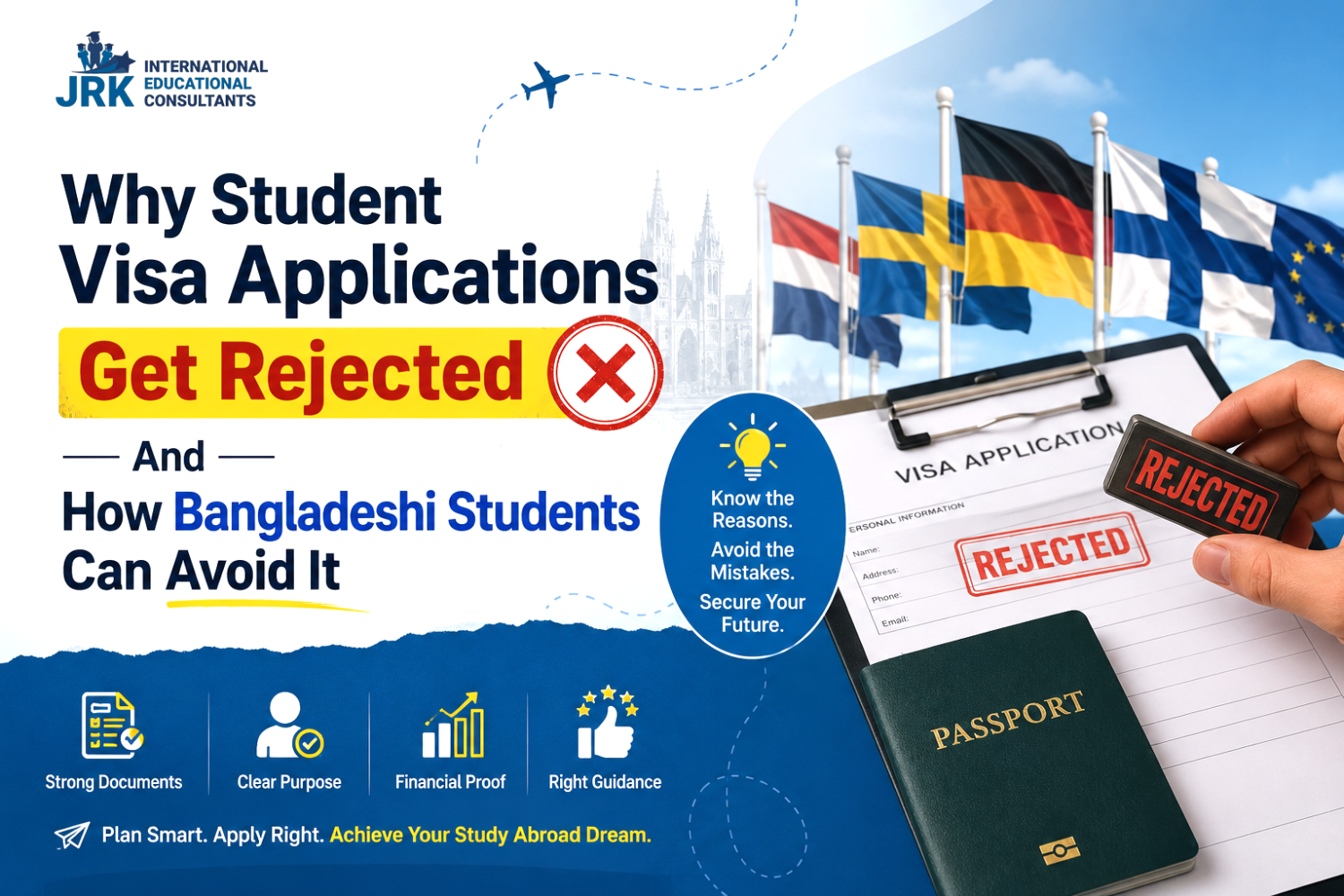
The numbers back this up. Across the Schengen area, Germany has stayed one of the more predictable destinations — rejection rates for Bangladeshi students hold around 10% — but the two main reasons behind those refusals are almost entirely avoidable. Other popular routes into Europe, from the Nordics to Central and Southern Europe, follow a similar pattern: officers aren't rejecting potential, they're rejecting incomplete or inconsistent applications.
Here's what's actually going wrong, and how to fix it before you apply.
1. Weak or inconsistent financial proof
This is the single biggest reason applications fail, across every destination. It's not just about having money in the bank — it's about the money making sense.
Common red flags visa officers look for:
- A large, unexplained deposit appearing shortly before the application (this alone can trigger a rejection)
- Bank statements that don't match the required minimum balance for the full duration required by that country
- Sponsor income that doesn't realistically support both the sponsor's own family and the student's education abroad
- Missing or unclear source-of-funds documentation (property sale, business income, foreign remittance, etc.)
Fix it early: Start organizing your financial documents 3–4 months before you plan to apply, not the week before. If a relative is sponsoring you, their financial history needs to look stable over time, not staged for the application.
2. Failing the "genuine student" test
Increasingly, this is where refusals happen. Immigration officers across Europe assess whether an applicant is genuinely going abroad to study, or using a student visa as a pathway for something else — even where this isn't formally named as a "genuine student" test on paper.
What raises doubt in an officer's mind:
- A study plan that doesn't logically follow from your previous academic background (e.g., switching fields with no explanation)
- A course or university that seems disconnected from your stated career goals
- Vague or generic answers about why you chose that specific course, university, or country
- No clear plan for what happens after graduation
Fix it early: Your Statement of Purpose and interview answers need to tell one consistent story — past education, why this course, why this country, and what you plan to do with it. If there's a gap or a career pivot, address it directly instead of hoping no one asks.
3. Incomplete or inconsistent documentation
This sounds basic, but it remains one of the most common reasons for rejection worldwide, including in Germany, where incomplete applications are one of only two major rejection causes.
Typical mistakes:
- Documents that don't match across the application (name spelling, dates, or figures that differ between the bank statement, the sponsor letter, and the visa form)
- Missing certified translations or notarizations
- Expired documents, especially police clearance certificates or medical reports
- Submitting a document checklist meant for a different visa category
Fix it early: Build a single master checklist for your specific destination and visa type, and have someone other than yourself review it before submission. A second pair of eyes catches inconsistencies you've stopped noticing.
4. Weak visa interview performance
Several European embassies, including Germany and France, require an in-person interview as part of the visa process. Nervous or rehearsed-sounding answers can undo an otherwise strong application — officers are trained to notice memorized responses that fall apart under a follow-up question.
Fix it early: Practice out loud, with someone asking follow-up questions you didn't prepare for. The goal isn't a perfect script — it's being able to explain your own decisions naturally.
5. Past visa history and compliance record
A previous overstay, a visa violation, or unexplained travel history can weigh heavily on a new application, sometimes regardless of how strong the rest of the file is. This is out of your control if it already happened, but it can be addressed directly and honestly in your application rather than left for the officer to question.
What this means if you're applying for 2026 intake
A rejection almost never comes down to one big dramatic mistake — it's usually one or two of the issues above, stacked together. The students getting approved are the ones who treat the visa stage with the same seriousness as the university application: starting early, keeping their financial story clean and consistent, and being able to explain their own plan without hesitation.
If you're unsure whether your documentation or financial profile is strong enough, it's worth getting it reviewed before you submit — not after a rejection letter arrives.
Source: published visa guidance for German student visas from Bangladesh (2026).